
Last updated November 20, 2026
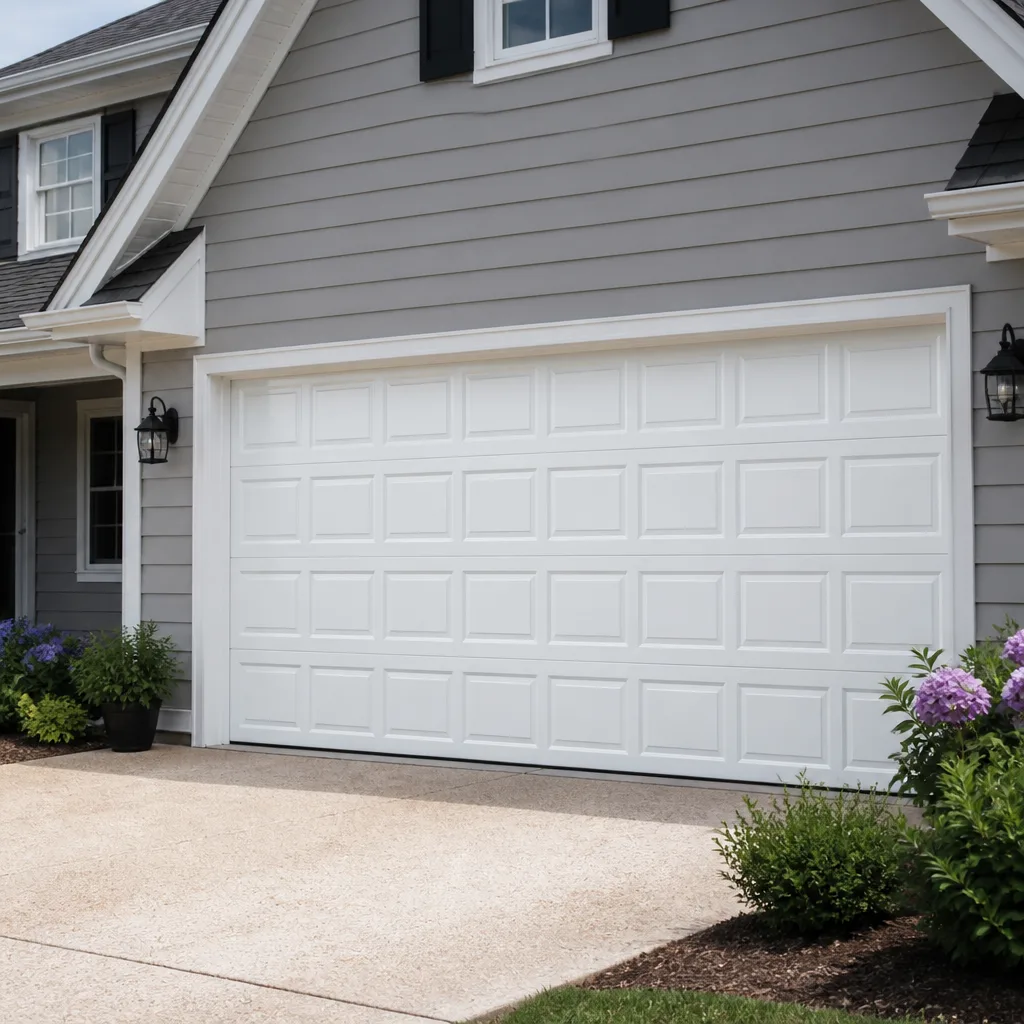 Raised-panel steel
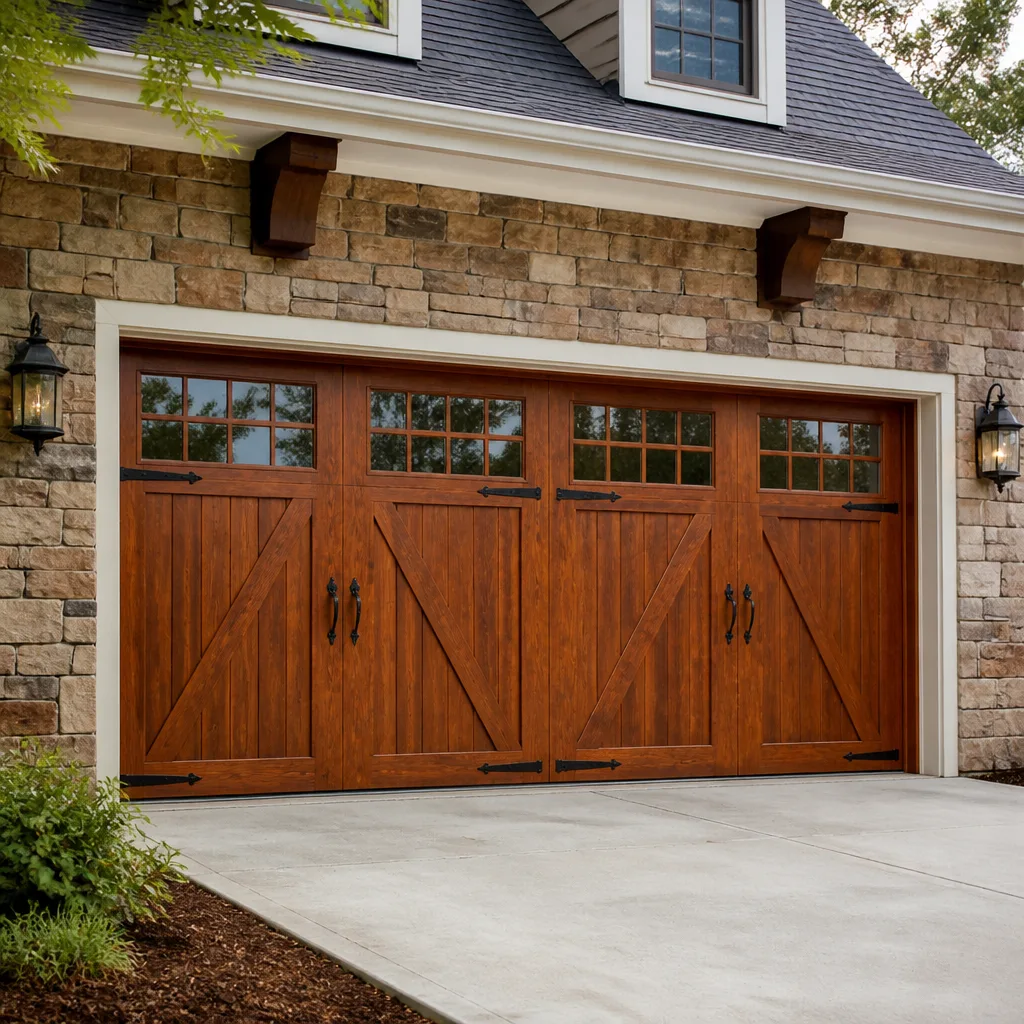 Carriage house
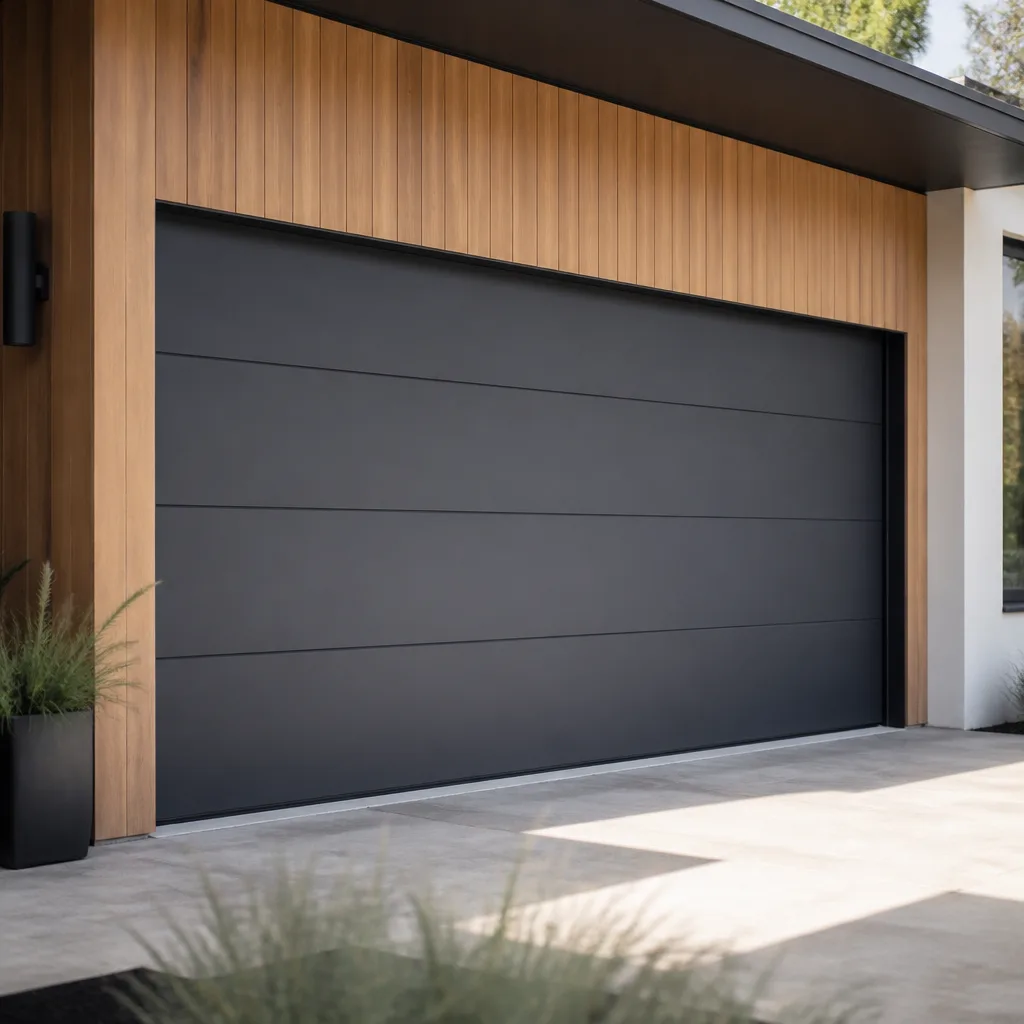 Modern flush
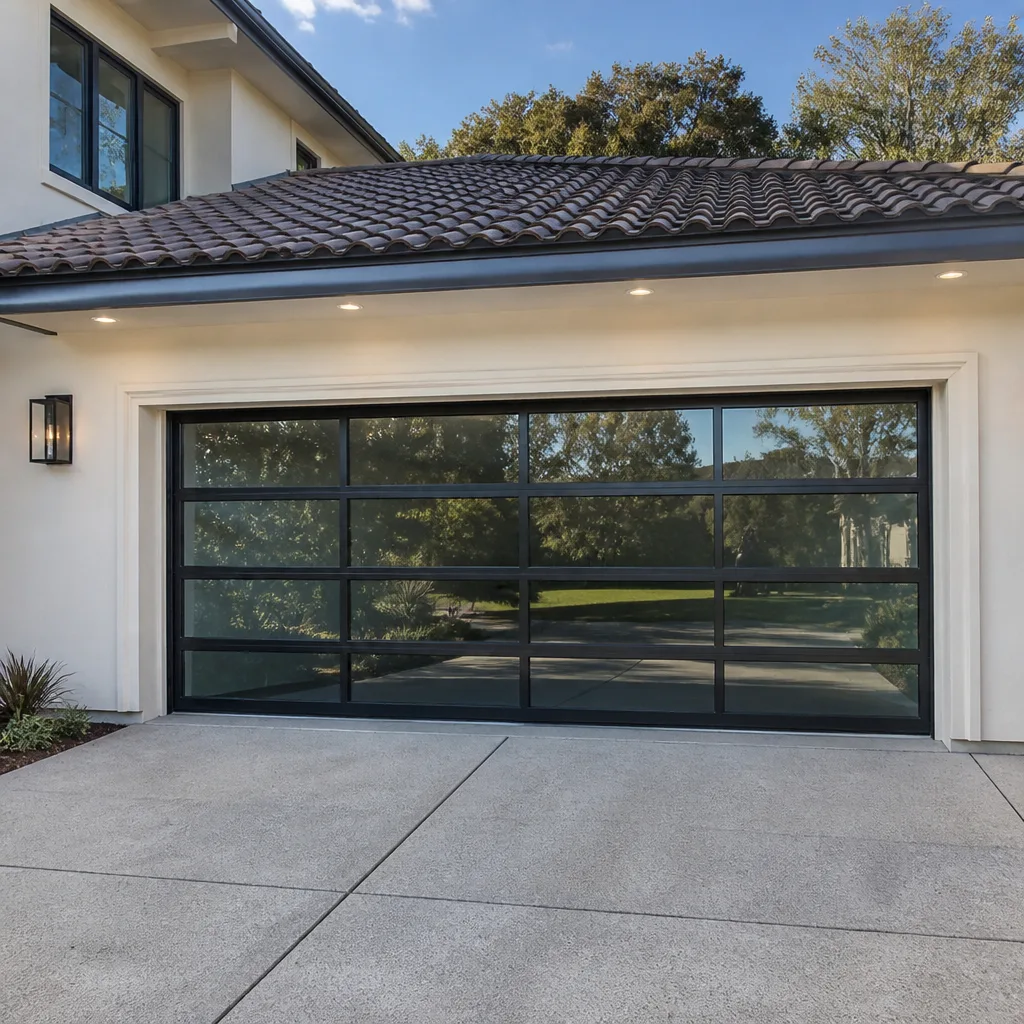 Full-view glass
 LiftMaster openers
 Chamberlain openers
Full 25-point door and opener safety check with every visit - springs, cables, rollers, tracks, and your LiftMaster or Chamberlain opener included
You get a price before we start. It does not change when the pro arrives.
Get your free estimateHow to Hire a Garage Door Contractor in College Hill: A Step-by-Step Guide
The most common mistake we see in garage door work isn’t a bad installation. It’s a contractor recommending a full door replacement when only the torsion spring assembly needs service. Homeowners hear a loud bang, see a door that won’t lift, and the first quote they get pushes them toward a four-figure new door instead of the component that actually failed. Knowing two or three diagnostic questions before anyone knocks on your door eliminates that risk almost entirely. This guide walks through how to hire a garage door contractor in College Hill the way a tradesperson would: what to ask, how to read a quote line by line, what “licensed” really covers in Ohio, and how to tell a manufacturer warranty from a promise that vanishes with the contractor.
Quick Answer
Hiring a garage door contractor in College Hill comes down to verifying three things before anyone shows up: that the company specializes in garage doors rather than general handyman work, that they can source parts for the specific brand and vintage of your system (not just the newest models), and that they’ll put the parts-plus-labor breakdown in writing before starting. Ask for brand experience, ask what a spring-only repair costs versus a full replacement, and confirm the warranty is manufacturer-backed rather than contractor-only. Everything below unpacks those checks in detail.
Styles & brands we work with
- Raised-panel steel
- Carriage house
- Modern flush
- Full-view glass
- LiftMaster openers
- Chamberlain openers
Table of Contents
- What Makes a Garage Door Specialist Different From a Handyman?
- What Questions Should You Ask Before Hiring?
- Why Brand Experience Matters in College Hill’s Older Homes
- How Do You Read a Garage Door Quote Line by Line?
- What Does Ohio Contractor Licensing Actually Cover?
- How Do You Verify a Warranty Is Real?
- Step-by-Step: How to Vet a Contractor Before Booking
- Red Flags That Should Stop the Process
What Makes a Garage Door Specialist Different From a Handyman?
A garage door specialist works exclusively on garage doors and garage door openers. A handyman works on everything and squeezes garage doors in between fences and drywall. That distinction matters most on the two hardest parts of the system: torsion springs and opener electronics. A torsion spring holds enough stored energy to cause serious injury if it’s released incorrectly, and a trained garage door technician has the winding bars, the safety procedures, and the experience to handle it. A generalist often doesn’t. Springs are the most dangerous component of any garage door, and that’s the reason we recommend a specialist even for what looks like a small job.
The difference also shows up in the second-hardest job: opener repair. Modern openers, especially app-connected systems like newer LiftMaster models, have control boards, logic gates, and safety sensor calibration that require manufacturer-specific knowledge. A handyman can swap a battery in a remote. A specialist can diagnose why a door reverses mid-travel on a particular model. If you’re not sure what your system needs, our page on garage door repair covers the symptoms that point to springs, openers, or track alignment.
In our experience, the homeowner who hires a generalist for a spring or opener problem usually ends up calling a specialist the following week. That’s not a knock on handymen. It’s just that garage door work requires tooling and training that most generalist operations don’t carry. When you’re evaluating a contractor in College Hill, “we do it all” is a warning sign, not a selling point. What you want to hear is a straight answer about what they specialize in and what they don’t touch.
Where the difference shows up fastest
- Spring work. A specialist carries the tools and understands the torsion versus extension differences on legacy systems.
- Opener repair. A specialist can match a replacement board or logic module to your exact opener model.
- Track alignment and roller replacement. A specialist understands how a bent track affects the door lift and the opener’s load.
- Installation. A specialist measures for spring load, not just door width, which affects how long the system lasts.
What Questions Should You Ask Before Hiring?
The right questions do two things: they tell you whether the contractor knows garage doors specifically, and they tell you whether the contractor will push a repair or a replacement. The second part is the harder one to draw out. Most contractors can answer the first without a specialist background. The second shows up in the way they describe a job before they’ve seen it. Ask these before anyone visits.
- Do you specialize in garage doors or general contracting? You’re looking for the first answer. A general contractor is a red flag on spring or opener work.
- What brands do you service? A specialist should name specific brands without pausing. We work on Wayne Dalton, Craftsman, Raynor, LiftMaster, Chamberlain, Genie, Clopay, and Amarr, and we say which ones when asked.
- Can you service legacy systems? Older Genie screw-drive openers, Wayne Dalton TorqueMaster springs, and early Craftsman models are common in College Hill’s older homes. A contractor who can’t handle them is a contractor who’ll push a modern replacement.
- What’s the typical cost for a spring-only repair versus a full door replacement? If the numbers are close, the contractor is padding the repair. They shouldn’t be.
- Do you provide a written estimate before starting work? The answer should be “always.” The final price is set by that written estimate, not by a verbal ballpark.
- Is your warranty manufacturer-backed or contractor-only? Manufacturer warranties travel with the part. Contractor warranties travel with the contractor. Ask which one you’re being offered.
- Are you insured as a garage door contractor specifically? General liability insurance is baseline. Ask whether the policy covers the type of work being done.
Write the answers down. If two contractors disagree on something basic like whether a spring-only repair is a real option, that disagreement is the diagnostic you need.
Why Brand Experience Matters in College Hill’s Older Homes
College Hill has a housing stock that ranges from mid-century builds to homes a few decades newer, and that mix produces a range of garage door systems. Some are the modern, app-connected openers you’d buy new today. Others are legacy Genie screw-drives, older Craftsman chain-drives, Wayne Dalton doors with TorqueMaster spring systems, and Raynor hardware that’s been quietly doing its job for years. A contractor who only knows the newest models will look at a legacy system and recommend replacement because sourcing parts and diagnosing the older hardware is harder than selling a new door.
Brand experience is a real skill, not a marketing claim. When you ask a contractor about your brand, listen for specific answers about parts sourcing and diagnostic patterns. A LiftMaster specialist will know the difference between a logic board failure and a safety sensor mismatch. A Wayne Dalton specialist will know how TorqueMaster springs behave and how to tell when they need service rather than a full replacement. When we work on your brand, we lead with what we know about that specific system, and we lead with the option that actually fixes the problem.
That brand specialization is one of the reasons a full-service garage door specialist works better than piecing the job together. A contractor who handles repair, opener repair, spring work, and installation under one company doesn’t hand you off when a repair turns into a larger conversation. For a legacy system with a creeping fault, that continuity matters more than a few dollars of hourly savings.
Brands that come up most often in College Hill
- Wayne Dalton. Doors using TorqueMaster springs are common on homes in this neighborhood’s mid-century and late-1900s builds.
- LiftMaster and Chamberlain. Frequent on newer installs and the smart openers that come with app controls.
- Craftsman. Legacy chain-drives are still working in plenty of homes; parts are still findable but require knowing exactly which model you have.
- Raynor. Solid mid-market doors with predictable hardware; diagnosis is usually straightforward once you know the system.
- Genie. Older screw-drive openers are common; newer models use belt-drive and require different tooling.
If your door carries a brand you don’t recognize, that’s not a reason to panic. It’s a reason to ask. Our page on garage door opener repair covers the opener symptoms that point to a specific brand issue rather than a generic failure.
How Do You Read a Garage Door Quote Line by Line?
A legitimate garage door quote is a line-item breakdown, not a single number. You should see parts listed, labor listed, and the specific service being performed listed separately. A one-line quote that says “Garage door repair: $X” is a signal to ask for detail. The written estimate sets the final price, and you should never sign off on a job where that final price is unclear before work starts.
For a typical spring repair in College Hill, expect the pricing to be per spring. A matched pair is usually replaced together, so a pair costs about twice a single spring. The reason for replacing both is simple: if one spring just broke, the other is at the same stage of fatigue, and you’ll be back in a few months if you replace only one. A quote that offers to replace one spring without explaining the pair logic is worth asking about, even if the single-spring price looks cheaper up front.
Line-item red flags to watch for:
- Bundled “diagnostic” charges that aren’t explained. A free estimate is the norm, and we quote free. A diagnostic fee should be stated clearly if it exists, not hidden in a bundle.
- Parts priced far above retail. A modest markup for sourcing and carrying the part is normal. A 3x markup is a signal to ask for the part number and check the retail price.
- Labor quoted as a percentage of parts cost. Labor should be tied to the actual work being performed, not scaled to the parts invoice.
- “While we’re in there” additions you didn’t ask for. Extra work should be recommended, not added without your approval. Line items you didn’t authorize shouldn’t appear.
- A quote that jumps from “springs” to “full replacement” without explanation. That’s the exact upsell pattern this guide exists to help you catch.
- No written estimate, only a verbal number. Walk away. A written estimate is your protection, not a formality.
What a good quote looks like: parts line items with the specific spring, roller, or opener component named; labor hours or a clearly stated labor charge; any warranty terms in writing; and a total that’s labeled as an estimate. If your quote hits all four, you’re in good shape. If it misses one, ask why.
What Does Ohio Contractor Licensing Actually Cover?
Ohio doesn’t issue a state-level garage door contractor license. Contractor licensing operates at the local level in Ohio, and the specific requirements vary by municipality. That’s the practical takeaway homeowners need: “licensed” in Ohio means whatever your local city or county requires, not a state-wide credential with a public lookup. Before you take that as a reason to relax, remember the opposite side of the same coin. Because there’s no state license to check, the other verification steps in this guide (insurance, brand experience, warranty terms, written estimates) carry more weight, not less.
Here’s what “licensed” actually guarantees and doesn’t, on a garage door job in College Hill:
- What it typically means: the contractor has satisfied the local business registration or licensing requirements that College Hill and Hamilton County set. That’s about doing business legally, not about technical competence on spring work.
- What it doesn’t guarantee: that the contractor is trained in torsion spring procedures, that they can source parts for your brand, or that their insurance covers garage door work specifically. Those are separate checks.
- What you should verify independently: general liability insurance that covers garage door installation and repair, worker’s compensation coverage if the contractor employs technicians, and specific brand experience.
Ask any contractor in College Hill to send you their certificate of insurance before they start. A legitimate contractor sends it without hesitation. A contractor who stalls or dodges that request is telling you something useful. If you’re uncertain what your city’s building department requires for your specific job, call them directly. We always recommend that. It’s a five-minute call that removes a lot of guesswork.
How Do You Verify a Warranty Is Real?
There are two kinds of garage door warranty, and homeowners usually don’t ask which one they’re getting. A manufacturer-backed warranty comes from the company that built the part, so it survives whether the contractor is still in business next year or not. A contractor-only warranty is a promise from the company that did the work, and it disappears if that company closes or stops honoring it. Both can be legitimate, but they’re not the same thing, and the price should reflect the difference.
How to verify a warranty before you accept it:
- Ask which warranty type is being offered in writing. “Manufacturer-backed” and “our warranty” mean different things. Get the specific term in the quote.
- Ask for the manufacturer warranty documentation. For parts, you should be able to see the manufacturer’s written terms, including what’s covered and how long.
- Ask what happens to the labor portion. Even manufacturer-backed parts warranties usually cover the part, not the labor to install a replacement. Ask what labor coverage the contractor offers and for how long.
- Ask what happens if the contractor disappears. If the answer is “the manufacturer warranty still covers the part, but you’ll pay labor to a new contractor,” that’s an honest answer. If the answer is vague, treat the warranty as contractor-only.
- Check the warranty terms for the specific failure you’re worried about. Springs, openers, and door panels often have different warranty terms even within the same brand.
In our experience, homeowners who ask this question before signing end up with a clearer picture of what they’re actually buying. A single spring has a different warranty story than a full door replacement, and the quote should reflect that. If a contractor won’t put the warranty terms in writing, ask why. If the reason is a verbal “we’ll take care of you,” that’s not a warranty. That’s a hope.
Step-by-Step: How to Vet a Contractor Before Booking
Here’s the process we’d walk through if we were hiring someone to work on our own door. Each step takes minutes, and together they give you the information you need to make the call with confidence.
- Identify your system. Write down the make and model of your door and opener. Check the opener housing or the owner’s manual. A quick photo of the sticker on the opener helps.
- Note what’s actually happening. Door won’t lift? Reverses mid-travel? Loud bang? Grinding? Be specific. The symptom is the first diagnostic data point.
- Ask two contractors the same questions. Use the list above. Compare their brand experience, their pricing on a spring-only repair, and their answers about warranty.
- Request a written estimate before any work starts. The estimate is free. If a contractor charges for the estimate, ask why. Free estimates are the norm for garage door work in College Hill.
- Confirm insurance and local registration. Ask for the certificate of insurance. Ask for their local business registration or license if applicable.
- Book with the written estimate in hand. When the technician arrives, confirm the estimate matches the job. Any change should be discussed before work begins, never after.
- Keep the paperwork. The written estimate and warranty documentation matter if a problem comes up later. Keep both.
How long should it take?
Steps one through four usually take an hour or two of your time, spread across a day or two. That small amount of prep is what protects you from the two most common bad outcomes: an upsell to a full door replacement when a spring service was correct, and a warranty that turns out to be contractor-only after the contractor is gone. If your door suddenly fails and you need help right away, a call is the right first move. We answer 24/7, and we offer same-day service when the schedule allows. But if you have time to vet, vet. It’s worth it.
Red Flags That Should Stop the Process
Most bad hiring decisions give off signals long before the work starts. You just need to know what to watch for. These are the ones we see most often in College Hill, and any one of them is a reason to slow down and ask more questions.
- The contractor leads with “we do it all.” If they don’t specialize in garage doors, they’re not the right person for spring or opener work. A general contractor isn’t the same as a garage door specialist, and the price difference rarely justifies the gap.
- The quote is a single line with no breakdown. You can’t verify parts and labor if the quote won’t show them. Ask for the line-item breakdown before you accept.
- Every job is a full replacement. If the first answer is “new door,” ask why a spring, opener, or track repair won’t solve the problem. A specialist answers the question. A salesperson avoids it.
- They can’t name specific brands. A contractor who services garage doors regularly names brands without pausing. If they hedge or say “we work on everything,” ask for specifics.
- They won’t put the warranty in writing. Verbal warranty promises aren’t warranties. Get the terms in the quote.
- They won’t send insurance documentation. A legitimate contractor in College Hill sends it without a second ask. A contractor who won’t is a contractor to avoid.
- The price moves after work starts. A written estimate sets the final price. If the price changes on the invoice, that’s a serious red flag and worth disputing.
Notice that most of these are patterns, not single incidents. A contractor who occasionally forgets to send the warranty doc isn’t necessarily bad. A contractor who can’t explain any of the above is a signal that the professionalism isn’t there.
Common Mistakes to Avoid
- Calling a handyman first because the price looks lower. On a spring or opener job, a handyman who isn’t trained for it can turn a small repair into a bigger one. Pay for the specialist.
- Accepting a full-replacement quote for a spring failure. Ask what a spring-only repair costs before you accept any replacement recommendation. The gap between the two quotes is your diagnostic.
- Skipping the written estimate. A verbal number isn’t a quote. If the written estimate isn’t offered, ask for it. If it isn’t sent, don’t book.
- Not knowing your own system. A five-minute check of the opener sticker gives you leverage on the phone. You’ll hear a different answer when you can name your brand.
- Assuming “licensed” means trained. In Ohio, licensing is local and modest. Confirmation of insurance and brand experience is where the real due diligence happens.
- Accepting a contractor-only warranty without knowing it. Ask whether the warranty is manufacturer-backed or contractor-only, and what happens if the contractor isn’t around in a year.
- Letting the price change after the work starts. The written estimate is the final price. Anything else is a conversation for before the job begins, not after.
See the difference
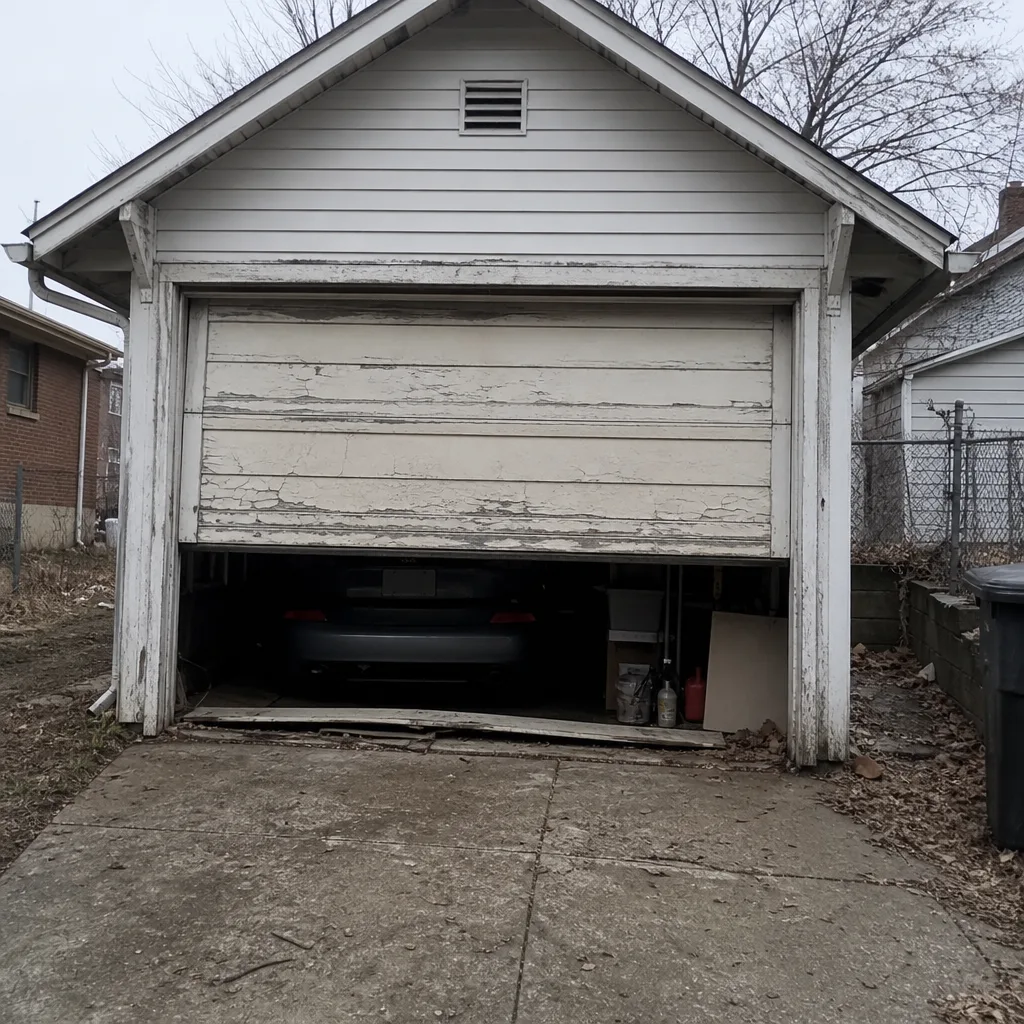 Before
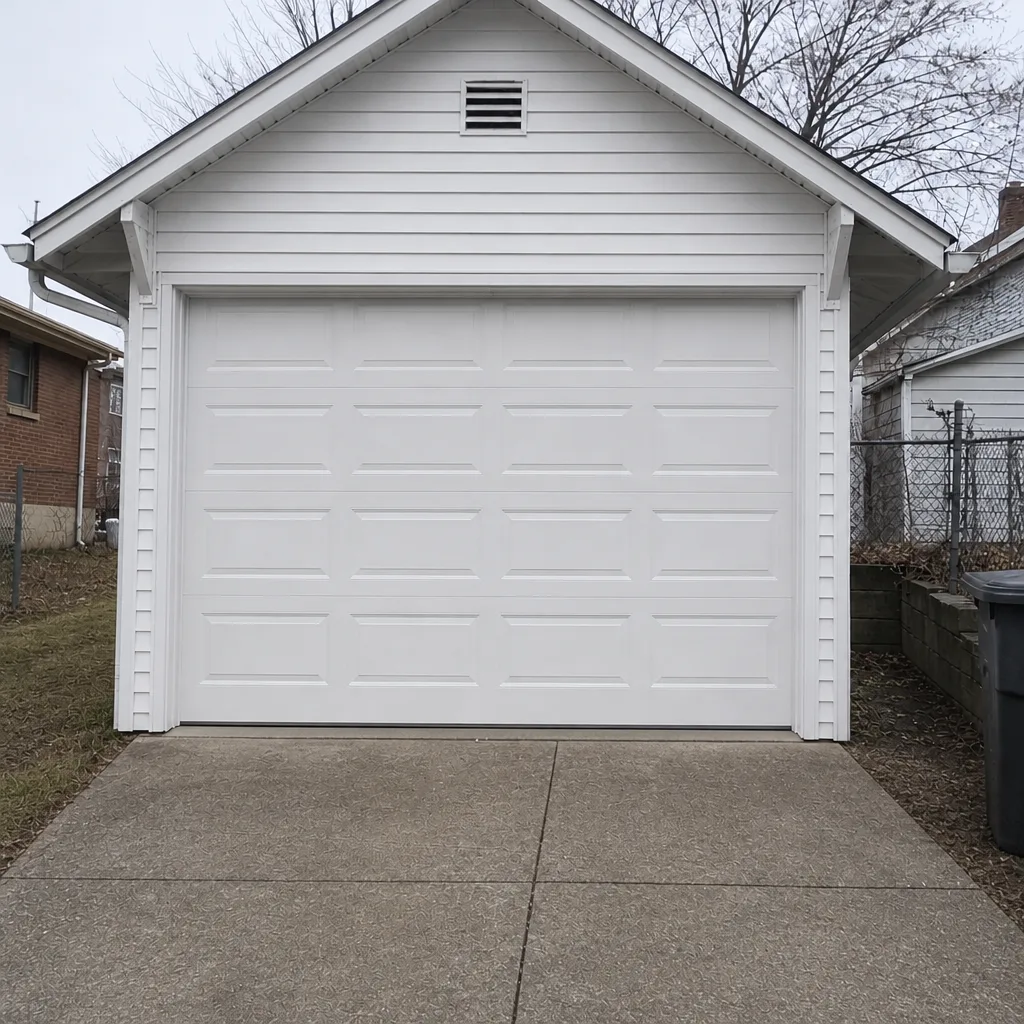 After
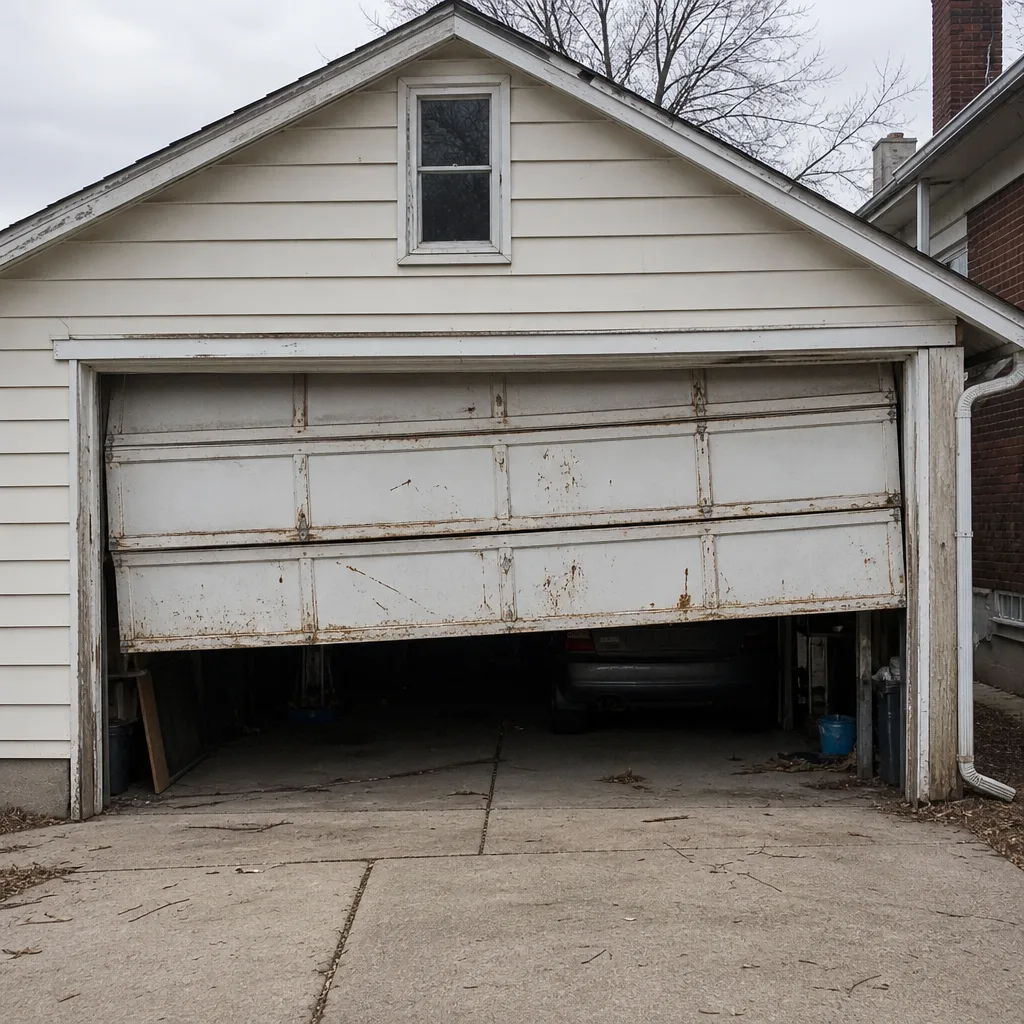 Before
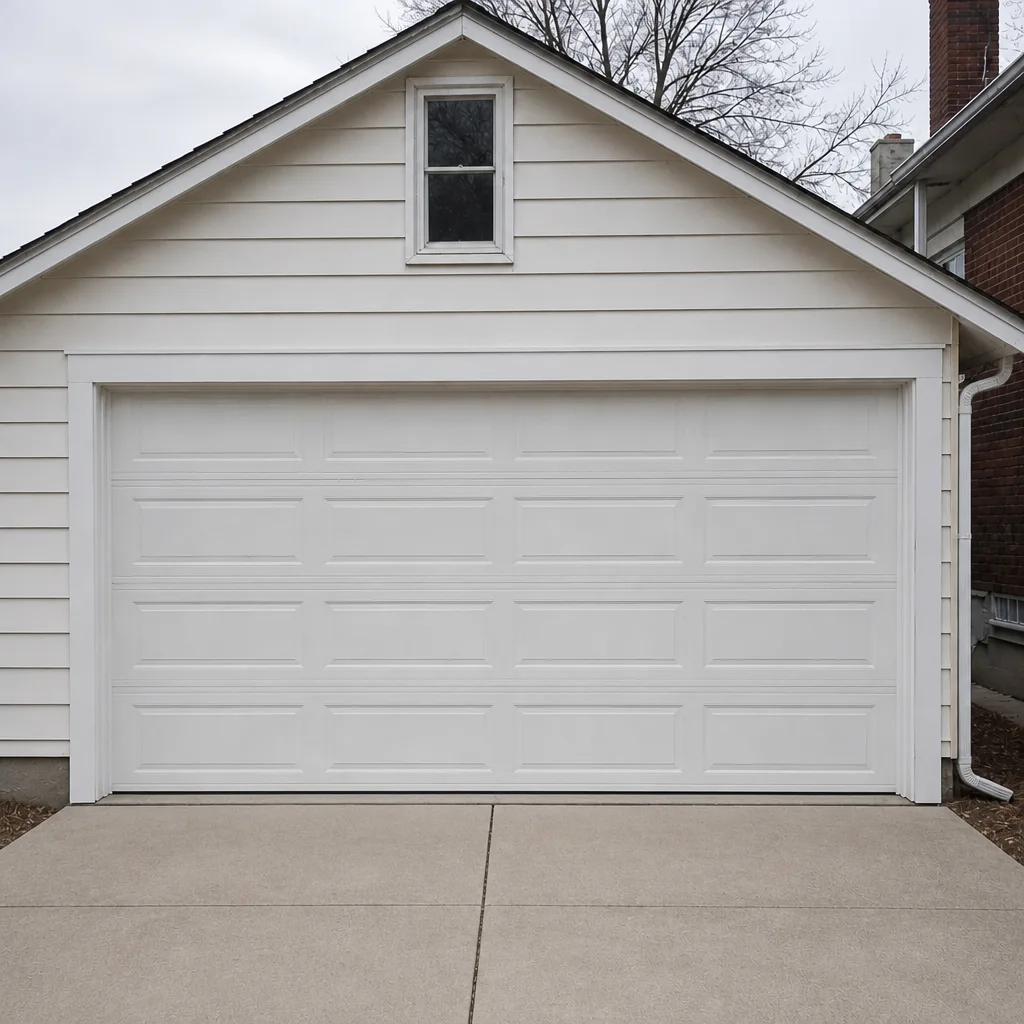 After
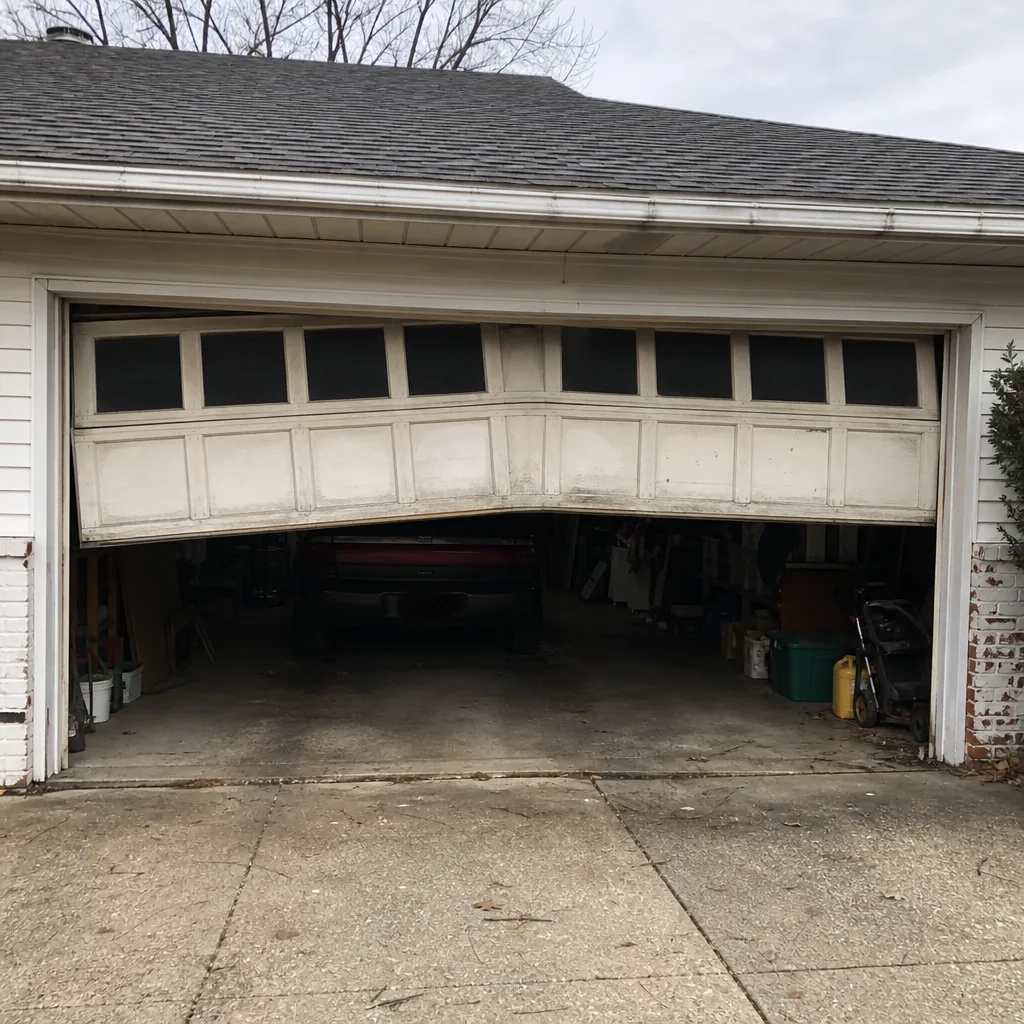 Before
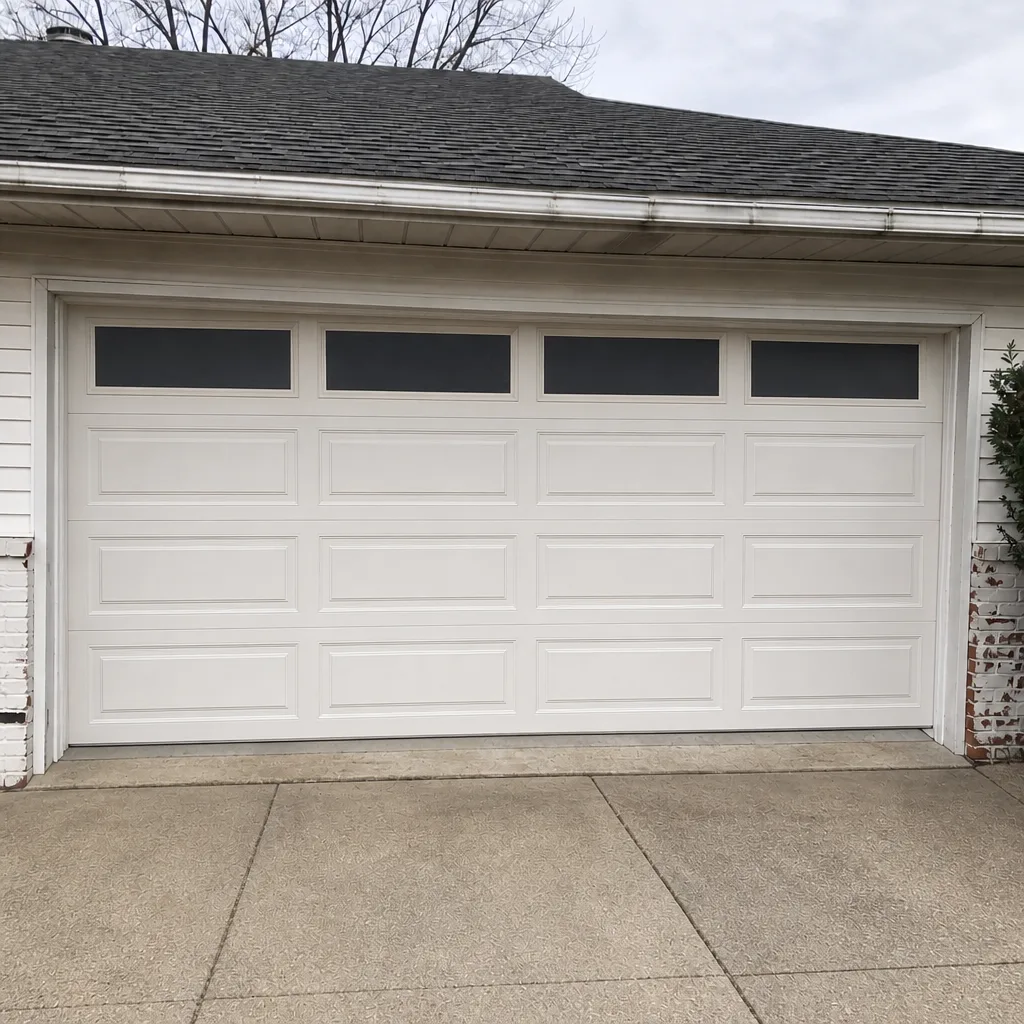 After
When to Call a Professional
Some garage door jobs are safe for a homeowner to check; most are not safe to fix. Call a professional when a torsion spring snaps (loud bang, door won’t lift, cables go slack), when the door reverses mid-travel or closes on an object, when the opener runs but the door doesn’t move, when a track is bent or a roller has jumped out, or when the door is sagging or off-level. Those all point to systems where the wrong tool or the wrong sequence of steps can cause injury or more damage. Springs, in particular, store energy that a homeowner shouldn’t try to release without training. The garage door opener electrical work behind the unit is a separate safety concern: if the symptom traces back to wiring, treat it as an electrician’s job, not a DIY one.
For jobs where the door is moving cleanly and the problem is a rolling-code remote that won’t pair, or a light that stays on, a call may not be needed at all. But when the door won’t move or one side is heavier than the other, call. Garage Door Repair College Hill offers free estimates in College Hill. Call (866) 401-7447. We answer 24/7, and fast dispatch runs from 7am to 7pm, Sunday through Friday.
Frequently Asked Questions
Spring repair is priced per spring, and a matched pair is usually replaced together, so the pair costs about twice a single spring. Your written estimate sets the final price. Call (866) 401-7447 for an exact quote. Estimates are free.
Yes. We work on Wayne Dalton doors with TorqueMaster springs, older Craftsman and Genie systems, Raynor hardware, and newer LiftMaster, Chamberlain, and Clopay installs. If your brand isn’t one we service, we’ll tell you before booking.
Ohio doesn’t issue a state-level garage door license; contractor requirements are set locally, and the local professional is licensed and insured as their state requires. Ask for the certificate of insurance before the job starts and any contractor should send it without hesitation. Call (866) 401-7447 for details.
The written estimate is the final price. If anything changes after a technician arrives, it’s discussed and agreed before any work starts, never added to the invoice after the fact. Call (866) 401-7447 for a free estimate.
We offer same-day service when the schedule allows, and we answer 24/7 for any urgent call. Fast dispatch runs from 7am to 7pm, Sunday through Friday. We’re closed Saturday; a call on that day is booked into the next opening. Call (866) 401-7447 for an exact quote.
A manufacturer-backed warranty travels with the part from the company that built it; a contractor-only warranty lives with the contractor and goes away if the contractor stops honoring it. Ask which one you’re being offered and get the specific terms in writing before you sign the estimate.
The Bottom Line
Hiring a garage door contractor in College Hill comes down to verifying three things: specialization in garage doors (not general handyman work), brand experience that includes legacy systems like older Genie screw-drives and Wayne Dalton TorqueMaster spring assemblies, and a written estimate with a real parts-plus-labor breakdown. Add the Ohio licensing reality (it’s local, not a state credential, so insurance and brand experience carry more weight), and you have a complete checklist. Skip the shortcuts. The five-line quote, the “we do it all” answer, and the verbal warranty are all worth pushing back on. When you’re ready to have the door looked at, call us and we’ll walk through your options with a free estimate. The best quality in the neighborhood isn’t the loudest contractor. It’s the one who answers your questions before you ask them.
Ready to book a free estimate in College Hill? Call (866) 401-7447. We answer 24/7, fast dispatch runs from 7am to 7pm, Sunday through Friday. When the door won’t move, we’ll help you get it working today. For a look at how we handle the full scope, see our garage door installation page and our main Garage Door Repair College Hill page.
Written by the team at Garage Door Repair College Hill.