
Top Signs You Need Garage Door Service – Don’t Ignore These
The surest signs you need garage door service in College Hill are a door that moves slower than it used to, uneven travel side to side, grinding or popping noises, a door that reverses before touching the floor, and any visible spring or cable damage. Each of these points to a specific component wearing out, not to normal aging. Left alone, most of them escalate over weeks. If you’d rather not diagnose it yourself, call (866) 401-7447 and we’ll tell you what’s likely going on.
Here’s the mistake we see most: homeowners treat a sluggish, noisy door as a personality quirk the house has developed. It isn’t. A door that takes two seconds longer to open than it did last month is losing spring tension, and that lost tension puts roughly 30 extra pounds of load on your opener motor every single cycle. Most motors were never rated for that. The symptom is small. The bill it’s building is not.
Your Door Is Slower Than It Was Last Month
A slow door is usually a torsion or extension spring that’s relaxing, and the sluggishness is your opener straining to lift weight the spring used to carry. That’s the mechanical chain reaction worth understanding before you call anyone. Stage one is spring tension loss, and the door just feels heavier and slower. Stage two, typically somewhere in the 30 to 60 day window if it keeps running, is opener overload: the motor runs hotter, the drive gear takes the stress the spring stopped absorbing, and you start hearing strain. Stage three, around 60 to 90 days of continued use, is a stripped gear or a snapped spring. That’s when the door stops moving entirely.
We work on LiftMaster, Chamberlain, and Genie openers daily, and the overload pattern doesn’t vary much by brand. Motors are built to lift a door the springs are already partly holding up. Once the spring quits helping, the gear and the motor absorb everything. If you want the opener itself looked at alongside the door, our garage door opener repair covers drive gears, logic boards, safety sensors, and remotes on the major smart and legacy systems.
What to watch: count how long the door takes to fully open. If it’s slower this week than last, the springs are the first thing to check, and the fix is cheaper now than after the opener goes.
The Door Travels Unevenly – One Side Lower Than the Other
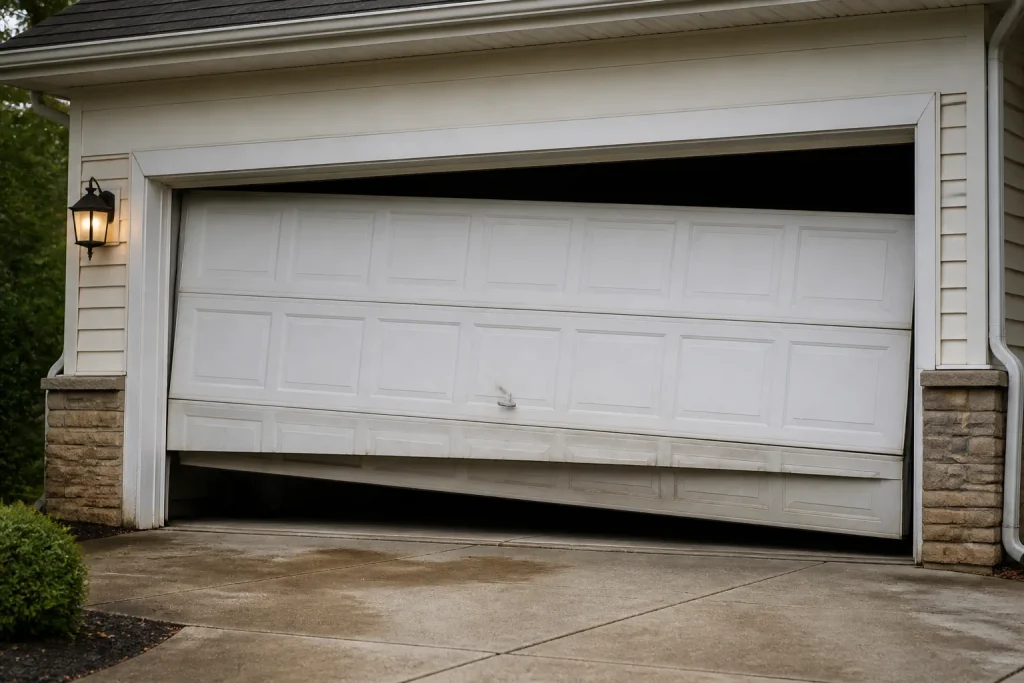
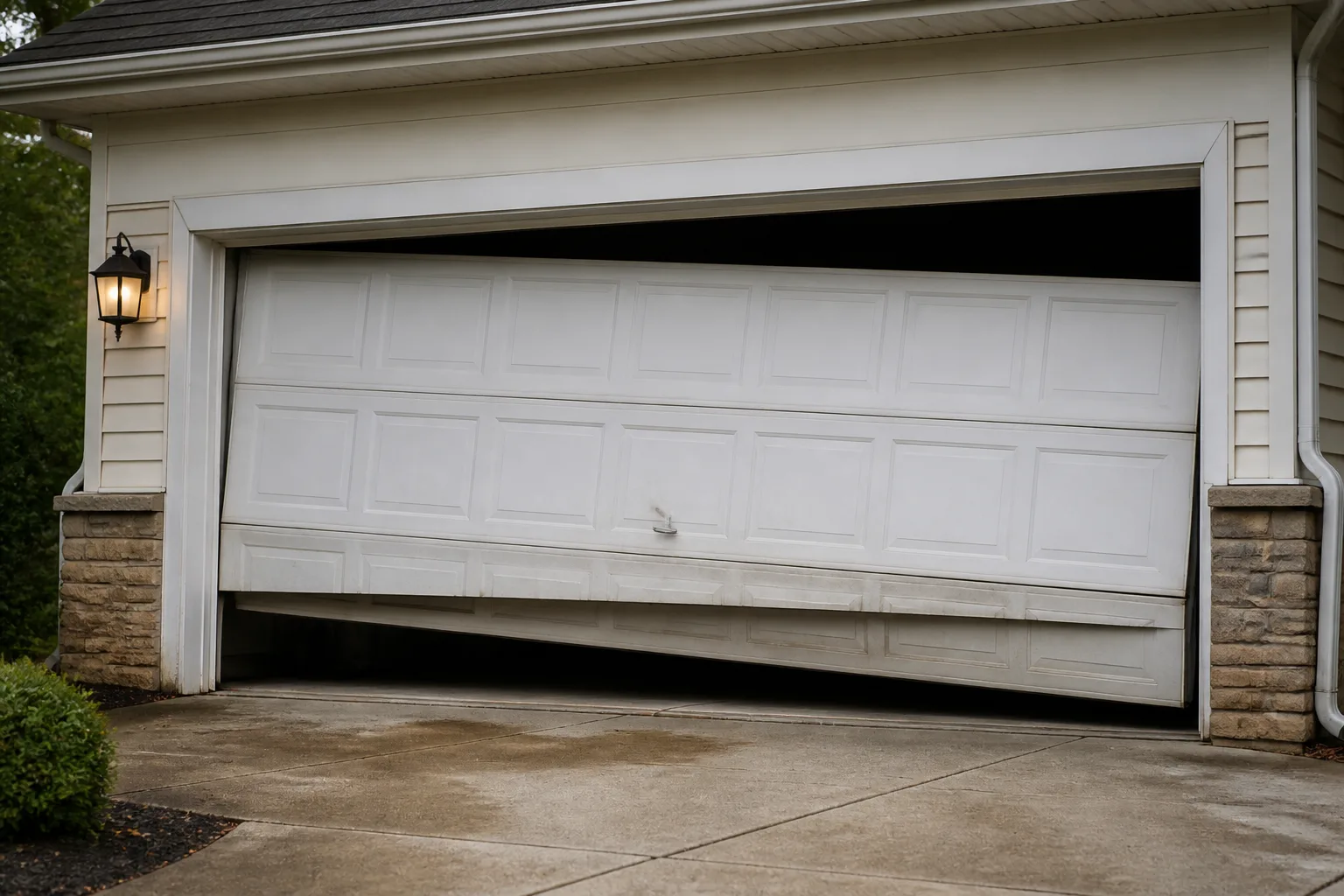
An uneven door is almost always a cable problem, not a track problem, and that misdiagnosis is one of the costliest we run into. Here’s why. When one side sits visibly higher, the lifting cable on the low side has usually slackened, stretched, or started to jump its drum. Homeowners see the gap, assume a bent track, and either ignore it or start bending things. Meanwhile the door is twisting on its hinges every time it cycles. That twist loads the panels, wears the rollers, and can bind the door hard enough to jam it.
Compare these two pictures:
- Track issue: a dented or misaligned vertical track usually shows a visible bend, and the door rubs at one specific point as it passes.
- Cable issue: the track looks straight, but one side of the door lags, the gap shows up as it rises, and you may see a loose cable hanging off its drum.
A door that’s been running uneven for weeks also tends to throw its opener rail out of alignment, which turns one repair into two. If you’re in College Hill and your door is visibly crooked, that’s worth a professional look before it jams shut. Our garage door repair handles cable, roller, and hinge replacements so the door travels level again.
What the Noise Is Telling You
Garage door noises are diagnostic. Each sound points at a different component, and matching the sound to the part saves you a guess:
- Grinding: usually a gear or drive system problem in the opener, or dry metal-on-metal at the rollers. On chain-drive units the chain or gear set is the first suspect.
- Popping: frequently a torsion spring under fatigue, or a cable jumping its drum. A single loud pop followed by a heavy door is often a spring letting go.
- Scraping: typically a deformed roller or a track that’s been knocked out of alignment, with the door dragging against it.
One grinding noise from a Craftsman or Wayne Dalton opener we’d put in the “get it looked at this week” pile. A scraping roller you can often ride a little longer, but it wears the track faster the longer it drags. If the noise only shows up at one point in the door’s travel, note where – that detail helps us pinpoint the part fast.
The Door Reverses Before It Hits the Floor
A door that reverses before touching the floor is a safety sensor or force-setting problem, and it won’t correct itself. The photo-eye sensors sit near the floor on each side of the opening, and when they’re blocked, misaligned, or fogged, the door reads an obstruction and reverses. Sometimes the sensors are fine and the opener’s force limit is set too high, so the door treats the last few inches of travel as an obstacle.
This one matters more than the others because it fails in two directions. If the sensor is faulty, the door may also fail to reverse when it should – and a door that closes on something or someone is a genuine safety hazard, especially with kids or pets around. The sensor system is designed to prevent exactly that, and a sensor that’s stopped working defeats it. Don’t tape over the sensors, don’t prop them up with a brick, and don’t override the force setting to make the door close. Get it diagnosed. We test photo-eyes and force settings on every brand we service, including Amarr and Clopay doors paired with the major opener brands. When the sensor is right, the door closes cleanly and stops the instant anything crosses the beam.
How to Spot the Problem Yourself Before You Call
Before you call anyone, a five-minute visual check tells you how urgent this is. Look at these three spots, door closed and opener disconnected from the door:
- Springs: on a torsion setup above the door, a healthy spring is tight and even along its length; a stretched gap or a visible break means stop using the door.
- Cables: the two cables should run tight along each side and sit neatly on their drums. Frayed strands, a slack cable, or one hanging loose means don’t run the door.
- Rollers: check the rollers in the track for flat spots, wobble, or bearings that look dry and caked. Worn rollers are cheap to swap and cheaper than the track they chew up.
Safety caveat: springs and cables are under extreme tension and are the most dangerous parts of any garage door. Never try to adjust, remove, or wind a spring or cable yourself – a spring or cable letting go can cause serious injury. Leave those to a trained technician with the right winding bars and containment tools. Our Garage Door Repair College Hill team handles spring and cable work as one of our core services. If the door is visibly broken, leave it closed and call.
Related services in College Hill: spring and cable repair, opener repair, and, if the door is beyond repair, garage door installation.
When to Call a Pro
Call a professional the moment you see a broken spring, a slack or frayed cable, a door that reverses without warning, or a door stuck partway open. Those aren’t weekend projects – they’re safety calls. A door that’s just noisy or a little slow can wait a day or two, but not much longer, since the overload builds with every cycle. We answer 24/7, and fast dispatch runs from 7am to 7pm, Sunday through Friday, so a door that fails at an inconvenient hour gets booked into the next opening without a wait. If you’re on the fence, the phone call is free and it sorts out whether you need us today or can plan a routine visit.
The Bottom Line
The signs worth acting on are the ones that point to a specific part failing, not the ones that just sound annoying. A slow door means failing spring tension and an overloaded opener. Uneven travel means a cable issue. Grinding, popping, and scraping each map to a different component. A door that reverses before the floor is a safety failure that won’t fix itself. And any visible spring or cable damage means the door stops moving until it’s repaired. The pattern holds whether you have a LiftMaster opener, a Genie, or a Clopay door – the symptoms point at the part, and the part tells you how urgent it is.
Our technicians have up to 14 years of experience, and one small upside of our job: we’ve heard every garage door noise there is, and the door has never once surprised us.
If you’re in College Hill and need help, Garage Door Repair College Hill offers free estimates – call (866) 401-7447. We answer 24/7, and fast dispatch runs from 7am to 7pm, Sunday through Friday.
Frequently Asked Questions
The first signs are a door that moves slower than it used to, uneven travel side to side, new noises, a door that reverses before hitting the floor, and any visible spring or cable damage. Any one of these points to a specific component wearing out. Call (866) 401-7447 for a free estimate if you spot one.
No, but a change in the type of noise usually is. Grinding, popping, and scraping each point to a different part – gear or drive system, torsion spring fatigue, or roller and track deformation. A door that’s always been a little loud is fine; a door that just started popping is not.
No. Springs and cables are under extreme tension and are the most dangerous parts of a garage door. Adjusting or replacing them yourself risks serious injury. Leave spring and cable work to a trained technician and call (866) 401-7447 to book it.
Treat it as urgent. A door that reverses early is usually a safety sensor issue, and it won’t self-correct. It can also fail the other way and close on something or someone. Don’t override the sensors or force setting – call (866) 401-7447 and get it diagnosed.
Written by the team at Garage Door Repair College Hill.
Need Garage Door Help?
Call Garage Door Repair College Hill - the local pro we connect you with is licensed and insured, here with fast help in College Hill.
(866) 401-7447