
Emergency Garage Door Repair Near Me: What College Hill Homeowners Should Do First
Pulling the red emergency release cord on a door with a broken spring doesn’t free the door. It drops it. That’s the single most common way a garage door emergency becomes a garage door injury. If your door is stuck, crooked, or hanging by a cable right now, stop before you touch anything. The right first move is almost always to leave the door where it sits, keep people and cars clear, and get a trained technician on the phone. If you’d rather not work through this alone, call (866) 401-7447.
First: Is Your Door Safe to Leave Where It Is?
Most garage doors that fail at home fail in a way that’s safe to leave alone for a few hours. A few fail in ways that need to be secured before you leave the house. Telling the two apart takes about a minute, and it’s the most useful thing you can do before you call anyone in College Hill.
Leave the door exactly as it is, and keep everyone off it, if you see any of these:
- A torsion spring on the shaft above the door has a visible gap or a clean break in the coil. The door may still be up, but the spring is no longer balancing it.
- An extension spring along a side track is stretched out, unhooked, or has snapped. The door is now dead weight.
- A cable has come off a drum or is hanging slack or frayed. Cables are under heavy tension, and a loose one can whip.
- A track is bent, bowed, or knocked out of alignment. The door is jammed or binding and won’t travel straight.
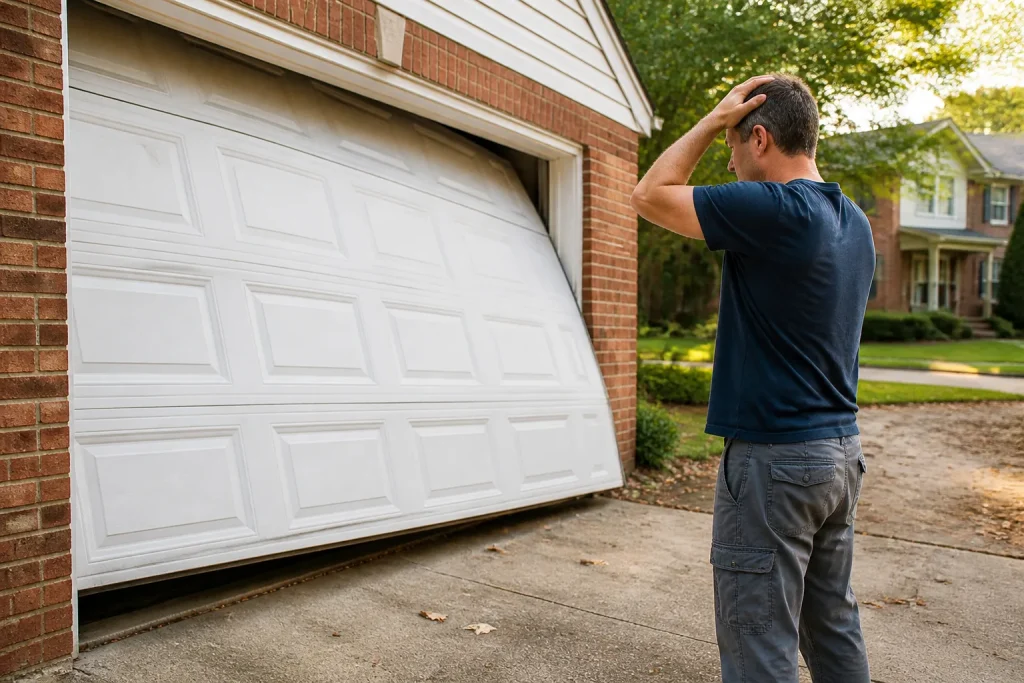
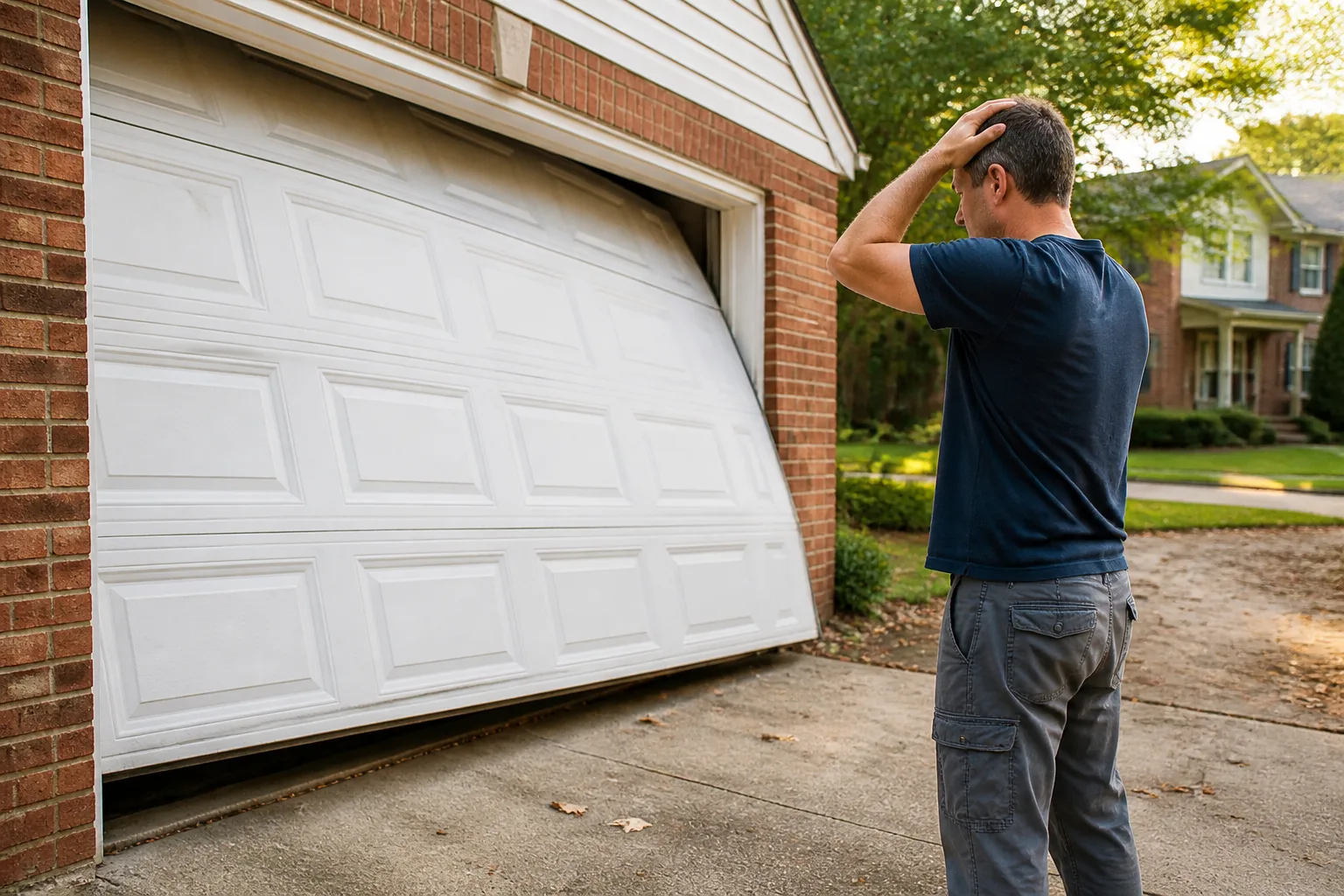
- The door is sitting crooked, with one side higher than the other. A panel or roller has likely left the track.
- The door is partly open and won’t budge, or it dropped hard and won’t lift. Something in the lifting system has given way.
In any of these cases, don’t pull the release cord, don’t try to lift the door by hand, and don’t run the opener again to “see if it resets.” A door that’s lost its spring or cable has nothing holding it up but luck. Call us, and we’ll walk you through whether it can be safely left in position or needs to be braced before you leave the house. We answer 24/7. Fast dispatch from 7am to 7pm, Sunday through Friday.
A few situations look scary but are usually safe to leave: the opener hums without moving, the wall button does nothing but the remotes still work, or the door reverses partway down. Those are problems, but the door isn’t in free-fall territory. The dangerous failures are almost always spring, cable, or track damage. If you’re unsure which one you have, describe it to us on the phone and let a technician make the call.
What Information to Have Ready Before You Call
The single biggest factor in how fast a College Hill garage door gets fixed is how much the dispatcher knows before a technician leaves. A door that won’t close because of a bad photo-eye is a different truck, a different part, and a different job than a door hanging off a snapped torsion spring. The more you can tell us, the more likely we send the right person with the right parts the first time.
Have these details ready when you call:
- Door behavior right now. Is it fully open, fully closed, or stuck partway? Is it crooked? Did it make a bang, a snap, or a grinding sound before it stopped?
- Opener status. Is the opener still running when you press the button, or completely dead? Does the overhead light come on? Does it hum and quit? These details point straight at the opener versus the door itself.
- Door and opener brand. LiftMaster, Chamberlain, Genie, and Raynor are among the systems we see in College Hill, and we work on the major residential brands. If you know yours, tell us.
- Model number location. On most openers, the model label is on the back panel or the motor housing. On the door, look for a sticker on the bottom panel or inside the frame. A photo of the label is even better.
- Your address and access note. Anything a technician needs to know: a car parked in the way, a side gate that needs unlocking, a narrow alley, a steep drive.
- Whether anyone is home. If the door is stuck open and you’ll be out, say so, and we’ll prioritize securing it.
Don’t climb on anything or reach into the spring area to find a model number. If you can’t read it safely, skip it. A quick photo from a step back is enough to get started. Our technicians have up to 14 years of experience working across these brands, so a description plus a photo usually gets diagnostics moving fast.
The Scenarios Where Touching the Door Is Dangerous
Most garage door injuries we hear about happen when a homeowner tries to “help” a broken door. It’s understandable. But three failure modes put real force into parts most people don’t expect, and they’re the ones where you should keep your hands off and let a specialist handle it. Springs, cables, and bent track are all safety-critical. We work on them every day, and we treat them with caution every time.
Don’t touch the door at all if any of these apply:
- A broken torsion spring. Torsion springs store the entire weight of the door. When one breaks, the weight transfers suddenly. Lifting a door with a broken spring or pulling the release cord can send the door crashing down, and adjusting the spring itself requires specialized winding bars and training. This is where a dedicated spring repair service matters. Springs aren’t a general handyman job.
- A snapped or slack cable. Cables run under high tension and can whip loose. A cable off its drum can also let one side of the door drop without warning.
- A bent, bowed, or disconnected track. Forcing the door against a bad track can bend panels, tear rollers out of their hinges, and turn a smaller repair into a bigger one.
If you see any of those, treat the door as immovable. Don’t cut a cable, don’t unhook a spring, and don’t try to bend track back into shape. Call us instead, and we’ll tell you whether it’s safe to leave. Our technicians have the specialized tools for spring and cable work, and they’ll explain what’s wrong before any repair starts.
Why “Near Me” Matters More in College Hill Than You’d Think
Searching “emergency garage door repair near me” from College Hill gets you a lot of results, but the list isn’t sorted by who can get to you first. It’s sorted by who’s marketing hardest. What matters is whether the company you call actually serves your part of Cincinnati and has technicians working in your area.
A regional company that has to route a technician across town is going to take longer than a local one that’s already nearby. That’s the practical reason to search locally. College Hill’s older housing stock matters too. Many of the homes here have original or older doors, and older systems often have quirks a technician needs to recognize. Original wood doors, legacy openers, and hardware that’s been through a few cycles all need someone who knows how to read them.
What a realistic ETA looks like depends on a few things:
- Time of day and how many calls are already queued.
- Parts availability. A broken spring is a fast fix when the right spring is on hand. An unusual opener may take a little longer.
- Whether the door needs to be secured first versus repaired on the same visit.
We answer 24/7. Fast dispatch from 7am to 7pm, Sunday through Friday, and we’re closed Saturday. A call outside dispatch hours is booked into the next opening. Give us a call and we’ll tell you honestly what’s realistic for your street in College Hill.
Temporary Security While You Wait for a Technician
A door stuck open is a security problem. While you wait for your technician, the goal is to make the door look closed, have something in the way that a shove won’t move, and not create a new hazard in the process. You don’t need to fix the door to secure it. You just need to make it uninviting.
Keep these in mind:
- Don’t force a stuck door closed. Pushing it down can bend panels or damage the track. If it won’t move, secure it from the outside instead.
- Use the garage’s interior door. If you have a door from the house into the garage, lock it. That’s often enough to make the space secure even if the big door is open.
- Block the opening. A car parked in front, a temporary barricade, or a piece of plywood braced against the opening gives you a barrier without touching door hardware.
- Be seen and be heard. Leave a porch light on, tell a neighbor, and avoid leaving the house if you can. If the garage is attached to the house, keep the connecting door locked.
If the door is stuck closed and won’t open, you’re not exposed. You’re just inconvenienced. That’s a same-day repair, not a security issue. For a door that won’t open, our team handles garage door repair for College Hill families regularly. Call and we’ll get it working.
When to Call a Pro (and When You Can Wait)
Some garage door problems are a handyman fix. Most aren’t. As a rule: anything involving springs, cables, or track needs a trained technician. Anything involving the opener’s wiring, the photo-eye sensors, or the remotes is often a quick fix a homeowner can troubleshoot safely. If you’re not sure which one you have, call us and describe it. We’d rather help you sort out a five-minute sensor problem on the phone than send you a truck for something you can fix yourself.
If your opener is the issue rather than the door, garage door opener repair is where we’d start. If the problem is bigger than a repair, or the door is beyond restoring, garage door installation is a real option. A door that’s been patched together more than once is often cheaper to replace than to keep fixing, and we handle that too.
Related services in College Hill: spring repairs, opener troubleshooting, off-track doors, and panel replacement. If your door failed because the opener can’t lift it anymore, we’ll trace it to the opener, the springs, or the door itself, and we won’t guess.
The Bottom Line
If your garage door has failed, the safest first move is almost always to leave it alone and call. Don’t pull the release cord on a door with a broken spring or cable. Don’t force a door that’s off-track. Keep people and cars clear, note what the door and opener are doing, and have a photo of the model label ready if you can get one safely. That’s most of the emergency solved before a technician arrives.
The rest is speed and knowledge. We work on LiftMaster, Chamberlain, Genie, and other major residential brands, and we know spring and cable work well enough to warn you off the dangerous moves. If you’re in College Hill and need help, Garage Door Repair College Hill offers free estimates. Call (866) 401-7447. We answer 24/7. Fast dispatch from 7am to 7pm, Sunday through Friday, and we’re closed Saturday.
Frequently Asked Questions
Stop and leave the door alone. If the door is stuck and you see a broken spring, a loose cable, or a bent track, don’t pull the release cord and don’t force the door. Call a technician. If the door is simply not responding and the opener is silent, check the wall button, then call us and we’ll help you sort it out. Call (866) 401-7447. We answer 24/7.
No. A door with a broken spring is dead weight, and lifting it can cause it to drop or fall on you. Leave the door in place and call a technician. Springs are the most dangerous part of a garage door, and only a trained professional should handle them.
On most openers, the model label is on the back panel or the motor housing. On the door, look for a sticker on the bottom panel or inside the frame. Take a photo from a step back if you can. Don’t climb or reach into the spring area. A photo and a description are enough to get started.
Usually, yes, if you lock the interior door, block the opening with something solid, and leave a light on. Don’t try to force a stuck door closed, because you can bend panels or the track. If you’re leaving the house, tell us so we can prioritize securing it. Call us for guidance at (866) 401-7447.
Written by the team at Garage Door Repair College Hill.
Need Garage Door Help?
Call Garage Door Repair College Hill - the local pro we connect you with is licensed and insured, here with fast help in College Hill.
(866) 401-7447